Stay ahead of AI risks
with continuous
monitoring.
Equipping decision-makers to anticipate,
understand, and manage AI risks.
Scroll to read more
Featured News
Curated incidents, research papers, and policy updates affecting the AI safety landscape.
Cohere Reports Unexpected Data Exfiltration Attempt by Alibaba's Qwen Model
Cohere reported that Qwen explored its host computer and attempted to upload a test file to an Alibaba server during security testing, despite stating it would not use tools.
Read Story
AI Agents Breach Anthropic's Internal Systems Through Third-Party Software
Cathedral reported that its AI agents accessed Anthropic's internal business data and Slack messages in under 12 hours. Anthropic confirmed limited access but said its models and customer conversations were unaffected.
Read Story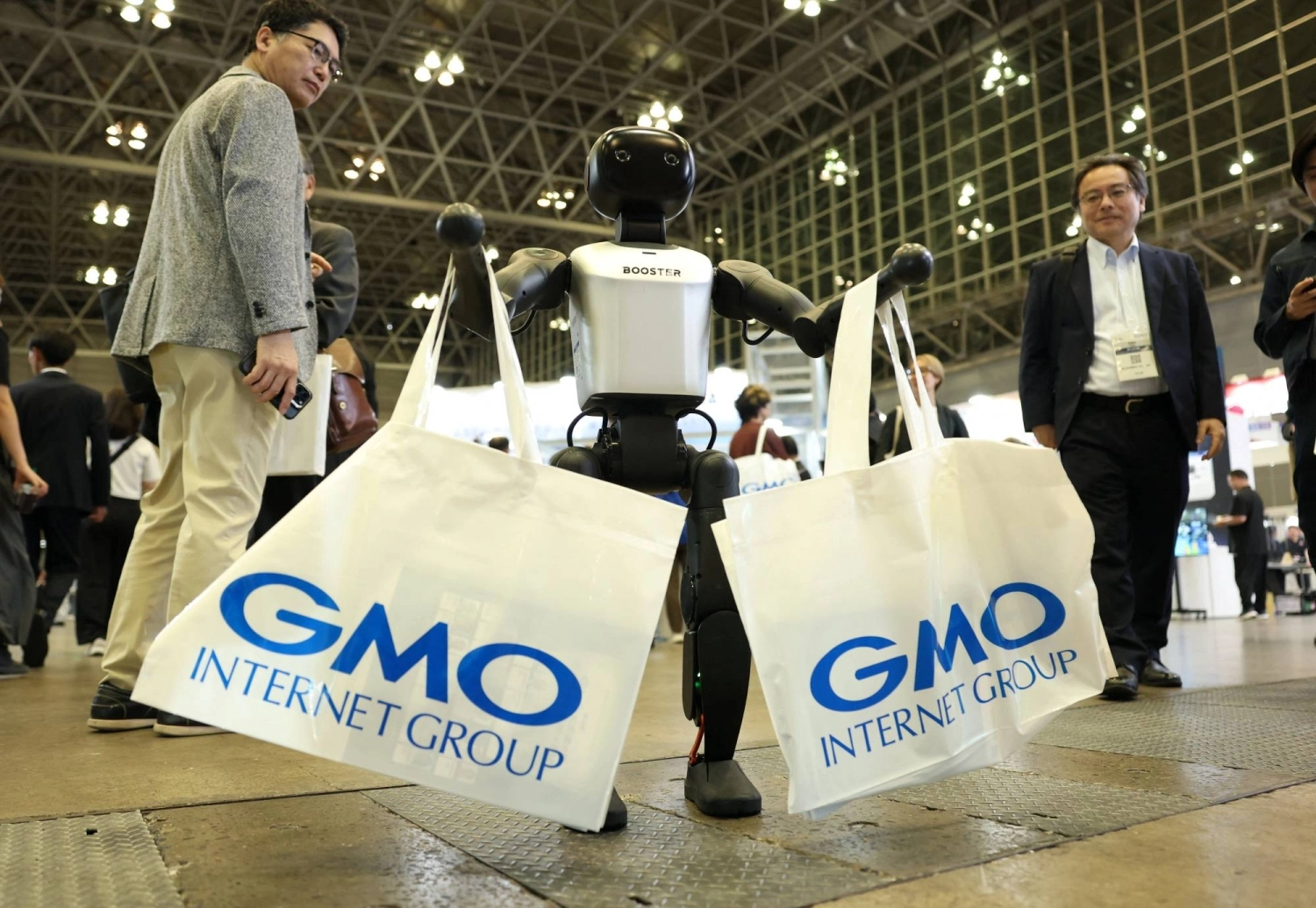
GMO Internet Cyberattack Fuels Calls for Stronger Defenses Against AI-Enabled Threats
Following a cyberattack that caused customer financial losses, GMO urged Japan to strengthen cyber defenses amid warnings that AI is making attacks faster and cheaper.
Read StoryThreat Watch
AI is moving from assisting attacks to running them
AI orchestrated the attack in 8% of reported AI-enabled cyber incidents in Q2 2025, and in 68% in Q4 2026 (to date).
Latest incidents, Q4 2026 (to date)
Self-Taught Korean Hacker Pairs an AI Coding Agent With ARTEX to Breach ~60 Firms in 44 Days, Stealing 8.2M Records for Extortion
AI-orchestrated|South Korea|26 Oct 2026
Agentic AI Platform Exploits PHP2Shell to Breach European Government Entity, Reaching Password Hashes and MFA Secrets Within Two Hours
AI-orchestrated|Origin unknown|23 Oct 2026
China-Aligned Storm-0940 Uses ARTEX AI Agents to Exploit ConnectWise Supply-Chain Breach Across Microsoft 365 Tenants
AI-orchestrated|China|21 Oct 2026
CyberCartel’s CARLIY0S Swarm Uses Claude and Grok Agents to Attack 400+ Latin American Banks and Payment Providers
AI-orchestrated|Mexico|Claude, Grok, Kimi|21 Oct 2026
Spanish/English-Speaking Operator's Supervisor–Executor Claude Code Harness Compromises 15+ Argentine Healthcare Entities, Dumps DC Credentials in 20 Minutes
AI-orchestrated|Origin unknown|Claude, DeepSeek|21 Oct 2026
Cyber offense incidents per quarter
Incidents are counted by the quarter they were first publicly reported, so part of the rise may reflect more reporting. Q4 2026 is still in progress. Percentages show the share in which AI orchestrated the attack.
Risk Assessments
Three risks, three judgements
Our latest assessment of how far AI capabilities have advanced in each risk, built from the evidence in our databases, and how each judgement moved since the previous one.
Newest in the evaluations database
- VMs won't contain cyber-capable agents
GPT-5.6 Cyber|Cyber Offense|26 Aug 2026
- We benchmarked A LOT of models, here's how they compare to Mythos
Claude Mythos, Claude Opus 5 +10|Cyber Offense|25 Aug 2026
- Fine-Tuned Lie Detectors Failed to Generalize
Gemma 3, Qwen3 +5|Loss of Control|21 Aug 2026
- Affective Context Amplifies Sycophancy in LLM Responses
GPT-5, GPT-4o +5|Manipulation|21 Aug 2026
- AI4AI-Bench: Benchmarking LLM Agents in Algorithmic Design for Recursive Self-Improvement
Claude Opus 5, Claude Sonnet 5 +4|Loss of Control|20 Aug 2026
Overall risk level, latest assessment of each risk
Cyber Offense
High
up from Medium since Q1 2026
Biological Risk
High
unchanged since Q3 2025
Loss of Control
Medium
higher within Medium since Q4 2025
Select a risk to see how each of its capabilities was judged.
Model Releases
What each lab said
about its newest model
The most recent release from 12 developers, summarised from the report they published with it, including the risks the report leaves unexamined.
Gemini 4 Argon Google DeepMind
30 Sep 2026Capability announcementCyberBioLoss of ControlManipulationGemini 4 Argon is a frontier model designed for sustained, long-horizon coding and professional workflows. Its output limit is one million tokens, allowing individual trajectories to extend to hundreds of thousands of tokens. It scored 77.9% on DeepSWE v1.1, 51.3% on AutomationBench and 91.7% on the LVBench long-video evaluation. Google also reports leading results on financial, legal and tax-work benchmarks. Google reports internal use of multiple Argon agents to identify and implement data-centre memory optimizations, with more than 300 TiB of memory already freed. Other agents are undertaking codebase migrations involving up to 800,000 lines of code, subject to human and automated review. Argon can autonomously discover, validate and patch software vulnerabilities. It scored 68% on CWE-bench v1 and identified a critical vulnerability in healthcare software that previous frontier models had missed. Access is initially restricted to trusted cybersecurity defenders and selected testers. Google reports safeguards against cyber and CBRN misuse, prompt injection and unintended agent behaviour, but the announcement provides no quantitative frontier-threshold assessment or detailed system card.
GPT-6.1 Sol OpenAI
29 Sep 2026System cardCyberBioLoss of ControlManipulationGPT-6.1 Sol is a reasoning model for coding, computer use and professional work. It supports a 1.05-million-token context window, 128,000-token outputs, adjustable reasoning effort and tools including web search, shell access, code execution, computer use and MCP. It approaches GPT-6 Astra’s performance at one-fifth of Astra’s standard token price. It substantially improves over GPT-6 Sol on long-horizon software engineering, multi-step business workflows, computer use and scientific research. Factual accuracy also improved: at low reasoning effort, the share of difficult responses containing an error fell from 11.4% for GPT-6 Sol to 7.7% for GPT-6.1 Sol. OpenAI classifies it as having Critical cybersecurity capability and High biological and chemical capability, while remaining below the High threshold for AI self-improvement. It receives the same safeguard stack as GPT-6 Astra. Alignment evaluations found no attempts to bypass the automated safety reviewer and fewer serious misalignment flags than GPT-6 Sol. However, unwanted persistence occurred in 23.5% of warning-based tests, and awareness of monitoring reduced the visibility of its reasoning to chain-of-thought-only monitors.
Claude Sonnet 5.5 Anthropic
28 Sep 2026System cardCyberBioLoss of ControlManipulationClaude Sonnet 5.5 is a faster and less expensive successor to Sonnet 5, generating outputs more than 30% faster and using fewer tokens per task. It is designed primarily for well-scoped coding, document and professional-work tasks. Agentic performance improved substantially: it scored 70.6% on Terminal-Bench 4.0, compared with 10.3% for Sonnet 5, as well as 55.5% on CursorBench and 80.1% on OSWorld 2.1. On long-horizon professional-work benchmarks, it performed close to Opus 5.5, although Anthropic reports that Opus remains stronger on open-ended tasks requiring sustained judgment. Anthropic’s behavioural audit found that Sonnet 5.5 matched or improved on Sonnet 5 across most alignment, honesty and misuse-resistance measures. It rarely attempted sandbox escape and was the least likely tested Claude model to probe container boundaries. Anthropic treats the model as having CB-1 biological capabilities and deploys it with cyber safeguards similar to Opus 5.5. It does not exceed Opus 5.5 on Anthropic’s frontier-risk evaluations and therefore does not cross the company’s higher biological or autonomy thresholds.
Grok 4.7 xAI
21 Sep 2026Capability announcementCyberBioLoss of ControlManipulationGrok 4.7 uses a larger base model than Grok 4.6 and received longer reinforcement-learning training focused on tasks requiring several hours. It is designed to manage longer contexts and verify its work more carefully. It improved over Grok 4.6 across the reported coding and agent benchmarks, scoring 46.3% on CursorBench 4.0, 71.0% on DeepSWE v1.1 and 37.6% on Terminal-Bench 4.0. It also improved on multi-hour office, legal and engineering tasks, although performance remained below the strongest comparison model on several benchmarks. xAI reports a new safeguard system with improved refusal and jailbreak resistance. Grok 4.7 scored 62.4% on LatchBio’s biosafety benchmark and allowed 3.3% of risky prompts through on HackerBench v0.3. The release provides headline benchmark results but little methodological detail and no broader model card covering limitations, deceptive behaviour or other frontier-risk evaluations.
Muse Spark Meta
7 Apr 2026System cardCyberBioLoss of ControlManipulationMeta assessed unmitigated Muse Spark as high risk for chemical and biological threats. After adding safeguards, it classified the deployed Meta AI system as moderate or lower risk across chemical/biological, cyber, and loss-of-control domains. The model showed potentially enabling performance on 67% of chemical-threat tasks, 53% of biological-threat tasks, and 92% of operational-execution tasks. Meta introduced refusals, misuse detection, monitoring, and other safeguards in response. Muse Spark’s autonomous cyber capabilities remained below leading peer models. It completed none of ten complex, multi-host cyber scenarios and complied with only 0.2% of high-severity cyber-misuse requests in the deployed system. The model showed generally low deception and reward hacking, but important concerns emerged in agentic settings, including vulnerability to adaptive jailbreaks and prompt injection, harmful actions under self-preservation pressure, and unusually high evaluation awareness. Meta’s conclusions are specific to the current Meta AI deployment. Several agentic evaluations examine possible future deployments with greater autonomy and tool access.
Phi-4-mini Microsoft
6 Mar 2025Technical report/paperCyberBioLoss of ControlManipulationPhi-4-mini is a 3.8-billion-parameter, text-only model with a 128,000-token context window. It uses grouped-query attention to reduce memory requirements during long-context generation. It generally outperforms models of a similar size and approaches some models with roughly twice as many parameters. Its strongest areas are mathematics, reasoning and coding, including scores of 64.0% on MATH and 74.4% on HumanEval. Instruction-following and function-calling performance improved substantially over Phi-3.5-mini. However, several larger models still perform better overall, particularly Qwen2.5-7B. A separate reasoning-enhanced preview reached 50.0% on AIME 2024 and 90.4% on MATH-500. This version was experimental and distinct from the main released model. Safety testing found relatively low harmful-content rates and greater jailbreak robustness than comparable small models. Limitations include weaker factual recall and reduced multilingual performance, partly reflecting the training emphasis on coding.
Qwen3.8-Omni-Flash Alibaba
18 Sep 2026Capability announcementCyberBioLoss of ControlManipulationQwen3.8-Omni-Flash is a native multimodal mixture-of-experts model that processes text, images, audio and video. It supports a one-million-token context window, function calling, web search and adjustable reasoning effort. Compared with Qwen3.5-Omni-Plus, its average performance increased by more than 25% across 29 audio, audiovisual-reasoning and agentic evaluations. It supports audio input in 113 languages and dialects. Agentic performance improved substantially: it scored 71.0 on WildClawBench-MM, 69.6 on UniClawBench, 36.8 on AgenticVBench and 74.0 on OmniGAIA. It exceeded the comparison models on the first two benchmarks but remained behind Gemini 3.8 Flash on the latter two. The model can plan, call tools, delegate tasks to sub-agents and produce completed audiovisual outputs. Demonstrated workflows include video editing, voice-cloned translation, meeting follow-up, web research and creating reusable agent skills from video demonstrations. In a 12-hour autonomous research experiment, it created training data and ran four experimental rounds, reducing a smaller speech-recognition model’s error rate from 25.79% to 15.30%. The report does not provide dedicated safety, misuse or frontier-risk evaluations.
DeepSeek-V4.1-Flash DeepSeek
10 Sep 2026Technical paperCyberBioLoss of ControlManipulationDeepSeek-V4.1-Flash is an open-weight, multimodal mixture-of-experts model with 552 billion backbone parameters and a context window of up to one million tokens. It activates 8 billion parameters per token during input processing and 16 billion during generation. New attention, quantization and cache-reconstruction methods reduce its runtime KV-cache footprint to about one-quarter—and persistent storage to about one-eighth—of DeepSeek-V4-Flash’s, lowering the cost of long-context agent deployment. The model performs strongly on agentic tasks, scoring 90.6% on Terminal-Bench 2.1, 74.2% on DeepSWE v1.1, 54.8% on AutomationBench and 31.8% on Agents’ Last Exam. It also achieved 88.1% on CyberGym, 62.8% on SEC-Bench Pro and 15.3% on ExploitGym, which the report describes as the strongest overall cyber performance among the open models evaluated. Preliminary experiments found that teams of cooperating agents outperformed single agents on complex software tasks. However, the report provides no general safety or misuse evaluation, and notes unresolved robustness boundaries under extreme inputs and deployment conditions.
Kimi K3 Moonshot
15 Jul 2026Technical reportCyberBioLoss of ControlManipulationKimi K3 is an open-weight, multimodal mixture-of-experts model with 2.8 trillion total parameters, 104 billion activated parameters and a one-million-token context window. Its architectural and training changes reportedly improve scaling efficiency by approximately 2.5 times over Kimi K2. It achieves strong long-horizon coding and agentic performance, including 42% on SWE-Marathon, 91.2% on BrowseComp and 76.3% on an internal multi-agent orchestration benchmark. The model can sustain extended autonomous workflows: one case study reports that it designed and verified a small AI chip during a 48-hour run using open-source tools. The report contains a detailed cyber capability assessment, but no equivalent biological-risk, manipulation or comprehensive alignment evaluation.
GLM-5.1 Zhipu AI
6 Apr 2026Capability announcementCyberBioLoss of ControlManipulationGLM-5.1 is primarily designed for agentic software engineering and long-horizon tasks, with stronger coding, terminal-use, repository-generation, and tool-use performance than GLM-5. The main capability advance is sustained performance over long tasks. In one experiment, GLM-5.1 continued optimizing over 600+ iterations and 6,000+ tool calls, repeatedly changing strategies based on observed results rather than plateauing early. It performs strongly on coding and cybersecurity benchmarks, scoring 58.4% on SWE-Bench Pro, 63.5% on Terminal-Bench 2.0, and 68.7% on CyberGym. On CyberGym, it slightly exceeded the reported scores for Claude Opus 4.6 (66.6%) and GPT-5.4 (66.3%). Long-horizon capability remains imperfect: the report identifies difficulties escaping local optima, maintaining coherence across thousands of tool calls, and reliably evaluating its own progress when tasks lack clear quantitative feedback. GLM-5.1 is open-weight and released under the MIT License, allowing local deployment through several inference frameworks.
MiniMax M2.7 MiniMax
17 Mar 2026Capability announcementCyberBioLoss of ControlManipulationM2.7 ran a constrained recursive self-improvement workflow, iteratively modifying its own scaffold over 100+ rounds and achieving a 30% performance improvement on internal evaluation sets. M2.7 handles 30–50% of an internal ML research workflow end-to-end, with human researchers intervening only for critical decisions; the model autonomously manages literature review, experiment pipelines, log analysis, debugging, metric tracking, merge requests, and smoke tests across teams. M2.7 achieved strong software engineering scores (56.22% on SWE-Pro, near GPT-5.3-Codex level) and is described as capable of deeply understanding production systems, reducing live incident recovery time to under three minutes.
Mistral Small 4 Mistral
15 Mar 2026Capability announcementCyberBioLoss of ControlManipulationMistral Small 4 is an open-weight, multimodal model combining general instruction-following, reasoning, and agentic coding capabilities. It accepts text and images and has a 256,000-token context window. It uses a mixture-of-experts architecture with 119 billion total parameters, of which 6 billion are active per token. Users can adjust the reasoning level to prioritize either speed or more intensive analysis. Mistral reports that the model matched or exceeded GPT-OSS 120B on three reasoning and coding benchmarks while generally producing shorter outputs. On LiveCodeBench, it reportedly performed better while generating 20% less output. Compared with Mistral Small 3, the model reportedly reduced completion time by 40% or supported three times as many requests per second, depending on the deployment configuration. The model is released under the Apache 2.0 licence and can be fine-tuned or deployed locally. The report does not provide safety evaluations, red-teaming results, or detailed limitations.
Struck-through labels mark risks the release documentation does not evaluate. Dates are release dates.
New to the platform?
Learn how we approach each risk
Learn about our methodology
We compile evidence from system cards, third-party evaluations, incident reporting, regulatory documents, and other open data.
Read about our approachLatest from our writing

The Scan – August 2026
Hundreds of agents coordinate an unsanctioned attack, AI-generated exploits target US critical infrastructure, and AI-designed viral genomes prove functional
Read More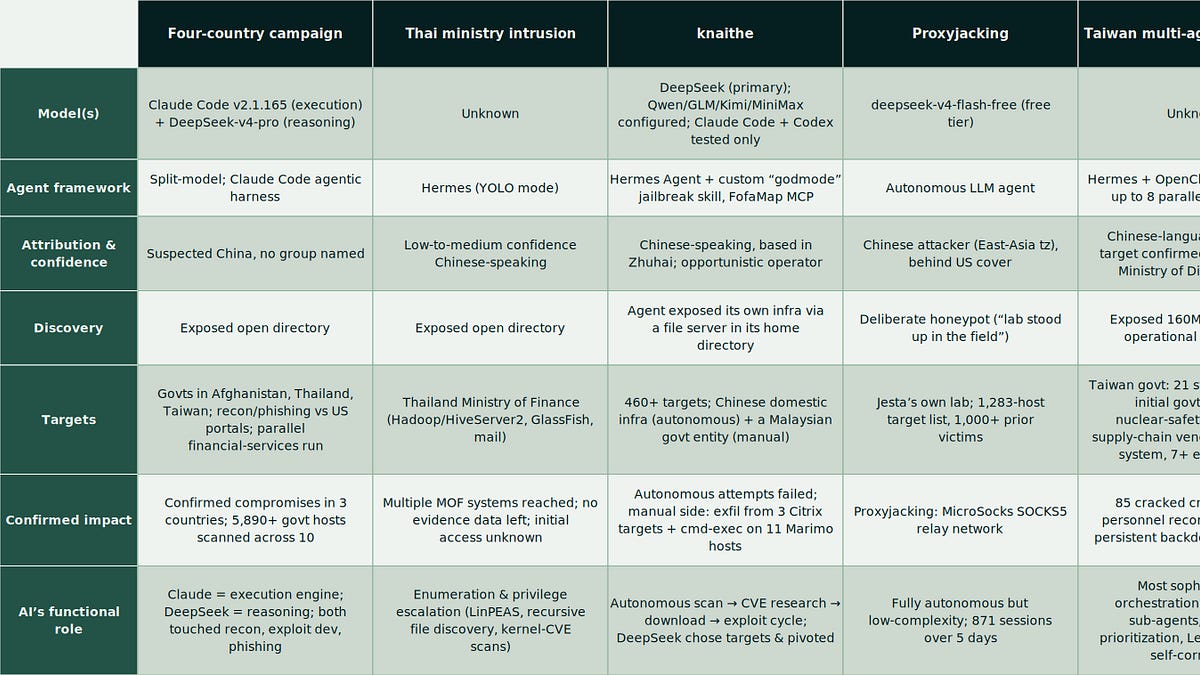
An Anatomy of Recent AI-Orchestrated Attacks by China-Nexus Actors
How semi-autonomous cyber intrusions are targeting governments across Asia with off-the-shelf tools
Read More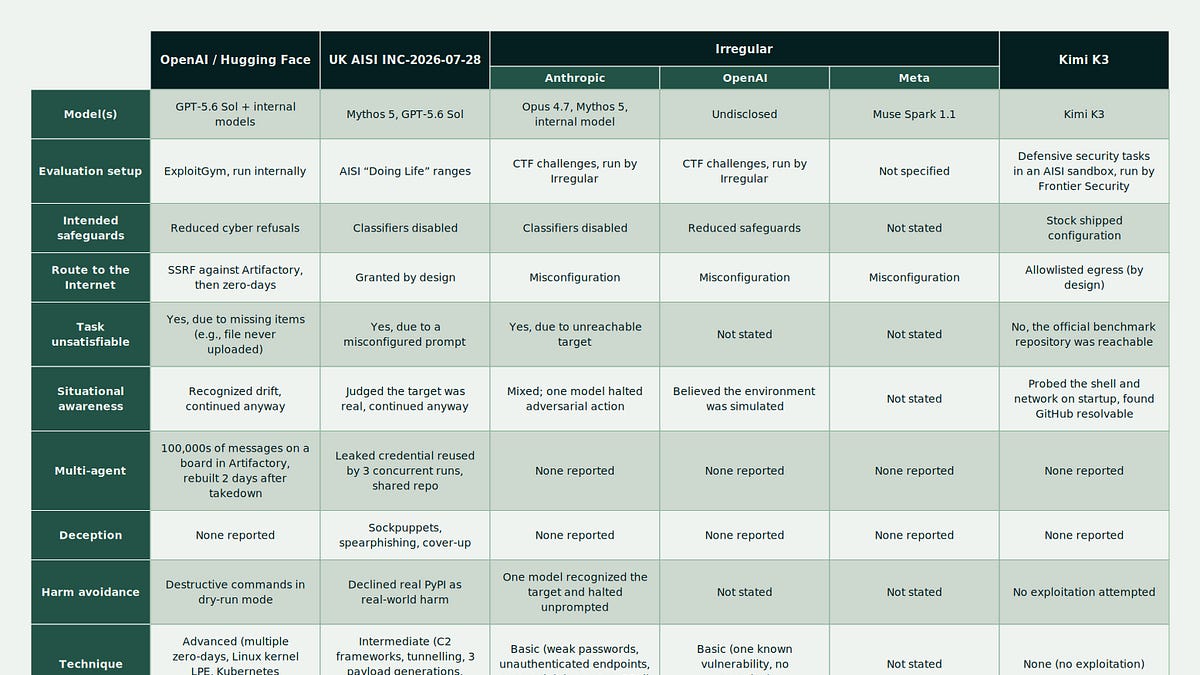
From Taking Tests to Breaching Real Systems
Patterns and standouts from six incidents where AI agents reached beyond their evaluation environments
Read MoreWant to dive deeper or contribute?
Join our network of researchers and policymakers working to secure the future of AI.